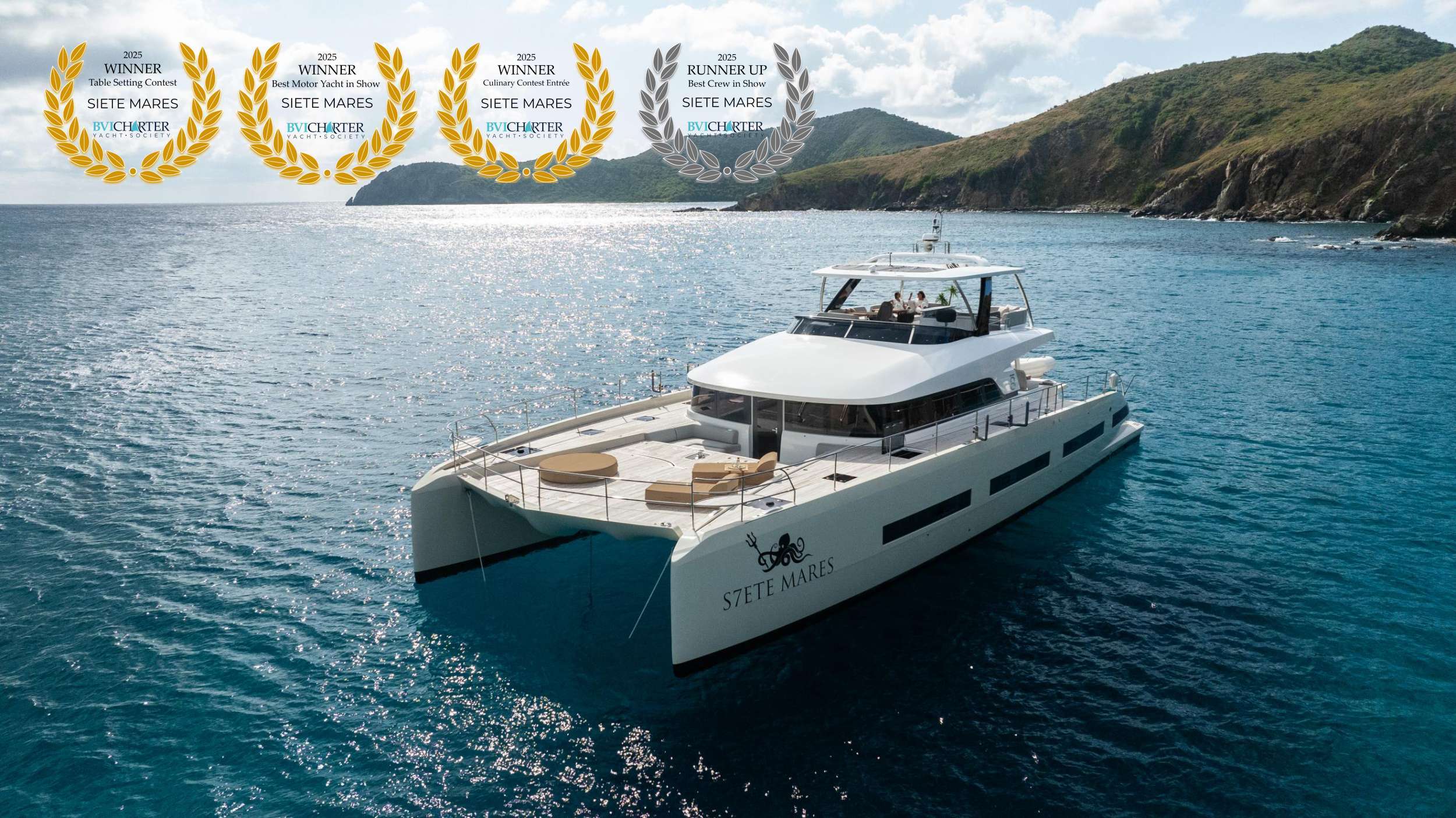
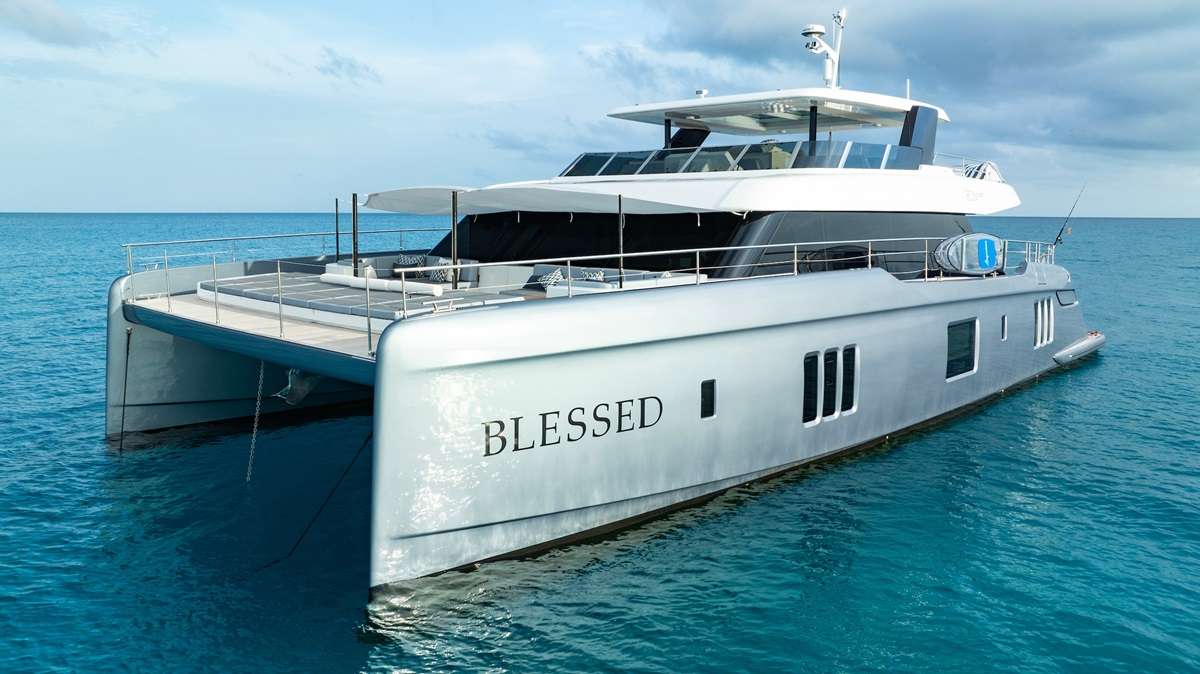
A crewed power yacht charter in the British Virgin Islands (BVI) gives your group more freedom to explore without spending much of the day in transit. Move comfortably between Tortola, Virgin Gorda, Jost Van Dyke, Norman Island and, when conditions and your itinerary allow, Anegada — with a professional captain and crew taking care of the details.
Choose between traditional motor yachts and spacious power catamarans. BVISAIL will help you compare the yachts that fit your dates, guest count, cabin needs, preferred pace and total working budget — including the practical differences in crew, speed, range, fuel, amenities and operating area.
Tell us your dates, guest count, cabin and bed needs, activity priorities, and approximate budget. A BVISAIL broker will compare suitable motor yachts and power catamarans with clear inclusions and exclusions.
Share your dates, guest count, cabin needs and preferences using our charter inquiry form. BVISAIL will check suitable yachts and crews for your group.
Get Your Yacht Recommendations →
No obligation to book. Advisory services are free.
The BVI rewards travelers who want variety: a quiet anchorage in the morning, snorkeling before lunch, a beach stop in the afternoon and dinner somewhere entirely different that evening. A power yacht makes those transitions easier because the experience does not depend on sailing wind alone.
For many groups, the advantage is not simply speed. It is flexibility. Your captain can shape the route around weather, sea conditions, mooring availability and what your group is enjoying most — while you return each day to comfortable cabins, outdoor living spaces and attentive crew service.
A power yacht can make efficient transfers between the BVI’s main islands and gives the captain more flexibility when adjusting the day’s plan.
Depending on the yacht, guests may enjoy en-suite cabins, air conditioning, shaded dining, sun decks, swim platforms and a wide range of water toys.
Traditional motor yachts emphasize yacht styling, performance and service. Power catamarans generally emphasize beam, volume, stability and shallower draft.
The captain manages navigation and safety; the chef and crew shape meals, service and activities around your group’s preferences. Local knowledge can be as valuable as the yacht itself.
Both vessel types offer comfortable, fast, crewed charter experiences in the BVI. The practical differences come down to hull design, interior volume, and how each handles in varying sea conditions.
| Decision factor | Motor yacht | Power catamaran |
|---|---|---|
| Typical appeal | May appeal to guests who prefer a traditional yacht profile, higher-performance styling, or a specific onboard service experience, depending on the yacht and crew. | May appeal to guests seeking greater interior volume, wider outdoor spaces, and a catamaran layout, depending on the yacht’s design. |
| Speed | Cruising speed varies by yacht. Some motor yachts are designed for higher-speed cruising, while others prioritize comfort and range. | Cruising speed varies by model. Some power catamarans balance speed, interior space, and fuel efficiency. |
| Fuel use | Fuel consumption depends on the yacht’s size, engines, cruising speed, and itinerary. Some motor yachts may use more fuel than a comparably sized power catamaran. | Fuel consumption is yacht-specific. Some power catamarans may use less fuel than a similarly spacious motor yacht, depending on operating conditions. |
| Draft / access | Draft varies by model. Some motor yachts may require deeper water and may have more limited access to certain anchorages. | Many power catamarans have a shallower draft, which may provide access to additional anchorages where conditions and captain approval permit. |
| At-anchor feel | Comfort at anchor depends on the hull design, beam, stabilizer systems, and sea conditions. | A wider beam may help reduce rolling at anchor, although comfort varies by yacht and conditions. |
| Best fit | May suit guests who prioritize motor-yacht styling, specific performance characteristics, or the onboard experience offered by a particular yacht. | May suit families or groups seeking larger social areas, greater cabin separation, or the layout advantages offered by certain catamaran models. |
Headline speed alone does not tell you how a yacht will perform on your charter. Ask what cruising speed, range and fuel consumption are realistic for your proposed BVI route under normal charter conditions. Your captain always retains authority over safe routing and speed.
| Specification | What it means | Question to ask |
| Cruising speed | The speed normally used for efficient, comfortable passages. | What cruising speed is realistic for this BVI route and sea state? |
| Maximum speed | A top figure achieved under specific conditions; rarely the everyday charter pace. | Is this number relevant to normal guest operation? |
| Range | Estimated distance between refueling under stated conditions. | Can the yacht complete the proposed route with a sensible reserve? |
| Fuel burn | Consumption changes with speed, load, hull, engines and conditions. | What fuel budget is realistic at the proposed cruising speed? |
| Generator/tender use | APA fuel may also include generators, tenders and motorized toys. | Which fuel-consuming activities are included in the estimate? |
| Refueling plan | Availability, berth access and schedule can affect the route. | Will refueling be required during the charter, and where? |
Most larger crewed power yachts use a base rate plus expenses. Fuel is normally paid from the Advance Provisioning Allowance (APA), not included in the base rate. The final fuel cost depends heavily on yacht size, engine load, cruising speed, distance traveled, generator use, tender trips and motorized water toys.
Tell BVISAIL the yacht or price range you are considering and the islands you would like to visit. We can help you compare the likely cost structure and request yacht-specific information for the proposed itinerary.
Discuss My BVI Power Yacht BudgetA power yacht is particularly worth considering for:
If the sailing experience itself is part of the dream, compare a crewed sailing catamaran before deciding.


The yacht’s current proposal and charter agreement determine the final price. Depending on the vessel, your total charter investment may include the base charter fee, APA or operating expenses, applicable taxes and permits, delivery or repositioning, optional services and discretionary crew gratuity.
| Cost component | How to treat it |
| Base charter fee | Yacht and named crew for the contracted period; confirm seasonal and holiday rates. |
| APA | Often requested as a percentage of the base fee and used for fuel, food, beverages, dockage, moorings and other operating expenses. The exact percentage is yacht-specific. |
| Taxes and permits | Confirm applicable BVI taxes, cruising permits and administrative fees in writing. |
| Delivery/repositioning | May apply when the yacht is not already positioned for the agreed embarkation port. |
| Crew gratuity | Discretionary and separate from APA unless the agreement expressly states otherwise. |
| Optional services | Diving, premium shore activities, special equipment, transfers and other requests may be additional. |
Many BVI power-yacht options begin in the tens of thousands of dollars per week. Larger and more highly specified motor yachts can exceed $100,000, $200,000 or considerably more per week. Rates vary by yacht, season, dates and operating area, so use the current yacht proposal rather than a broad category range.
On many plus-expenses charters, an APA is paid in advance to fund items such as fuel, food, beverages, dockage, moorings and other operating expenses. The percentage and covered items are yacht-specific. Any balance or shortfall is handled according to the charter agreement.
Ask your broker to identify the taxes, cruising permits, administrative charges and any delivery/repositioning costs applicable to the exact yacht and itinerary.
Crew gratuity is discretionary. Your broker can explain customary guidance for the yacht and charter market, but the charter agreement and your assessment of service should guide the final decision.
Rather than choosing a yacht from its base rate alone, tell BVISAIL your approximate total budget. We can help identify yachts whose complete cost structure is realistic for your group.
For guests who want a complete breakdown of expenses, BVISAIL provides a detailed BVI yacht charter cost article. This guide covers base rates, APA, taxes, gratuities, and inclusions so you can see the true total cost of your charter.
The BVI’s main islands are relatively close together, but distance, sea conditions and your preferred pace still matter. A power yacht can make broader itineraries practical, while your captain will determine the safest and most enjoyable route for the actual conditions.
The largest island in the BVI and the usual embarkation point for charters. Highlights include Cane Garden Bay, Smuggler’s Cove, and Road Town’s restaurants and provisioning options. Most charter weeks begin and end here.
A short passage south of Tortola and a popular first-night anchorage. The sea caves at the western tip offer some of the BVI’s best snorkeling. The Bight provides a calm, sheltered anchorage with a floating restaurant nearby.
The Baths — a series of giant granite boulders, grottos, and tidal pools on the southwest coast — is the BVI’s most recognized landmark. North Sound offers access to resort facilities, calmer water for watersports, and excellent snorkeling at several nearby sites.
White Bay is famous for the Soggy Dollar Bar and the Painkiller cocktail. Great Harbour offers a more local, relaxed atmosphere. Diamond Cay, on the eastern tip, is quieter and worth including if time allows.
A flat coral island at the northern edge of the BVI, Anegada requires a conscious decision to include — it is farther than the main group and reached across deeper, more exposed water. The reward is genuinely remote beaches, outstanding reef snorkeling, and lobster dinners on the beach. A five- or seven-night itinerary is needed to do it properly.
Both offer calm anchorages, good snorkeling, and access to dive sites. Cooper Island’s beach club is popular with charter guests for lunch stops. The RMS Rhone, the BVI’s most famous wreck dive, lies in the waters between Salt Island and Peter Island.

A yacht advertised for eight, ten or twelve guests is not automatically right for every group of that size. Couples, singles, children, bed preferences, mobility needs and crew accommodation can materially change whether the layout works. BVISAIL verifies the guest arrangement before recommending a yacht.
| Layout point | Why it matters |
| Master/VIP cabins | Size, deck position and amenities can differ substantially, affecting cabin allocation. |
| King/queen/double beds | Labels and dimensions vary by yacht; request actual measurements if bed size matters. |
| Twin and convertible cabins | Useful for singles or children, but conversion method and comfort should be confirmed. |
| Pullman or bunk berths | May increase capacity without providing another full cabin; check age and weight suitability. |
| Ensuite bathrooms | Most charter-grade yachts advertise ensuites, but verify the arrangement for every guest cabin. |
| Crew accommodation | Confirm the advertised guest cabins remain available after crew cabins are assigned. |
| Event/day capacity | Never assume overnight capacity equals permitted event or day-guest capacity. |
| Priority | Power Yacht | Sailing Catamaran |
|---|---|---|
| Experience underway | Primarily engine-powered, allowing passages largely independent of wind conditions. | Sailing may be part of the journey when wind and weather conditions permit. |
| Route pace | May be better suited to itineraries that prioritize covering more distance or visiting more islands within a limited timeframe. | Often favors a more relaxed cruising pace with fewer long-distance passages. |
| Fuel / expense structure | Fuel costs can be a significant variable, particularly on plus-expenses charters. | Propulsion fuel may be lower in some situations, although generators, tenders, and motoring still contribute to operating costs. |
| Space and stability | Space, layout, and onboard comfort vary considerably by yacht design and size. | Twin-hull designs often provide generous living areas and a stable platform for their length. |
| Best-fit traveler | Guests who prioritize schedule flexibility, motor-powered cruising, or covering more ground during their charter. | Guests who value the sailing experience, quieter passages, and a slower island pace. |
If the experience of sailing under Caribbean trade winds is central to your vacation, compare BVI sailing catamarans before making your final choice.
These routes are inspiration, not navigational plans. Your captain will adapt the itinerary to weather, sea conditions, mooring availability, embarkation point, yacht capability, and your group’s interests.
Best for: First-time guests, couples, and shorter celebrations
| Day | Suggested Route | Experiences |
| 1 | Tortola → Norman Island | Welcome aboard, settle in, snorkeling at the caves, sunset in The Bight |
| 2 | Norman Island → The Baths → North Sound | Explore The Baths, afternoon cruise, dinner in North Sound |
| 3 | North Sound → Jost Van Dyke | White Bay, beach bars, Great Harbour or Diamond Cay |
| 4 | Jost Van Dyke → Tortola | Morning swim and return for disembarkation |
Best for: Families and groups wanting variety without an overly busy schedule
| Day | Suggested Route | Experiences |
| 1 | Tortola → Norman Island | Caves, snorkeling, and a relaxed first evening |
| 2 | Norman Island → Cooper Island | Cistern Point, watersports or rendezvous diving |
| 3 | Cooper Island → The Baths → North Sound | Granite grottoes and resort dining |
| 4 | North Sound → Jost Van Dyke | White Bay, Great Harbour or Diamond Cay |
| 5 | Jost Van Dyke → Cane Garden Bay or Peter Island | Beach time, sunset, and dinner aboard |
| 6 | Return to Tortola | Breakfast, final swim, and disembarkation |
Best for: Guests who want Anegada, varied activities, and a complete BVI experience
| Day | Suggested Route | Experiences |
| 1 | Tortola → Norman Island | Snorkel the caves and settle into yacht life |
| 2 | Norman Island → Cooper Island | Snorkeling, diving, and beach-club dining |
| 3 | Cooper Island → The Baths → North Sound | Explore Virgin Gorda’s signature attraction |
| 4 | North Sound → Anegada | Remote beaches, reef snorkeling, and lobster dinner |
| 5 | Anegada → North Sound or Scrub Island | Watersports, resort facilities, and a relaxed evening |
| 6 | Virgin Gorda area → Jost Van Dyke | White Bay and Great Harbour |
| 7 | Jost Van Dyke → Cane Garden Bay or Peter Island | Beach time and a quiet final evening |
| 8 | Return to Tortola | Breakfast and disembarkation |
PERSONALIZE YOUR ROUTE
Choose your charter length and the experiences that matter most. Use the result as a starting point, then let your captain and BVISAIL shape a route that fits the yacht, conditions, and your group.
Suggested routes are examples only and are not navigational plans.
Before recommending a yacht, we look beyond photographs and headline price. We consider:
Tell us how you want to spend your days, and we’ll recommend available power yachts with the right layout, crew, equipment, and cruising capability.
Build Your Dream BVI TripA memorable yacht charter is not simply a list of islands. It is a crew paying attention to how your group likes to travel.
That might mean leaving a little earlier so you can enjoy a popular BVI landmark before the busiest part of the day. It might mean the chef remembering which breakfast your children loved, or the captain changing the afternoon plan because your family discovered that snorkeling together was the highlight of the trip.
The itinerary provides structure. Exceptional hospitality makes the week feel personal.
At BVISAIL, we consider the crew as carefully as the yacht because the right people can transform a beautiful boat into an unforgettable vacation.
Crew arrangements vary by yacht. Many crewed charters include a captain and one or more additional crew members, such as a chef, stewardess, mate, or deckhand, depending on the yacht’s size, layout, and service level. The captain is typically responsible for navigation, safety, and itinerary planning, while other crew members may assist with meal preparation, guest service, watersports, and day-to-day operations. Confirm the crew composition for your selected yacht before booking.
Cabin layouts vary by vessel. Some power catamarans offer three or four guest cabins, while larger motor yachts may accommodate additional guests. En-suite bathrooms are common but not universal. Cabin sizes, bed configurations, air conditioning, storage space, and crew cabin arrangements can differ significantly between yachts, so review the specifications for your chosen vessel carefully.
Meal and beverage inclusions depend on the yacht and charter pricing structure. On APA charters, provisions, beverages, and other operating expenses are typically paid from the APA account and selected according to guest preferences. On inclusive charters, some or all meals and beverages may be included in the charter rate. Available menu options, premium alcohol selections, and specialty requests vary by yacht and crew.
Always review the specific inclusions provided for your selected charter.
Water toy inventories are highly yacht-specific. Some yachts carry basic equipment such as snorkeling gear, paddleboards, and kayaks, while others may offer wakeboards, towable inflatables, fishing gear, Seabobs, e-foils, or additional watersports equipment. Availability, age restrictions, operating requirements, and fuel charges may vary.
If watersports are important to your group, request the current toy list for the exact yacht you are considering.
Scuba diving availability varies by yacht. Some charter yachts carry dive equipment and may offer onboard diving where permitted and properly staffed. Others arrange rendezvous diving through local BVI dive operators. Certification requirements, instructor availability, air fills, equipment rentals, and associated fees can differ from one yacht to another. Guests planning to dive should confirm the available options before booking.
Always review the written proposal and charter agreement for the exact yacht before relying on an inclusion. Inclusions can differ significantly between APA and inclusive charters, as well as from one yacht to another.
A successful family charter is usually less about choosing a specific yacht and more about selecting a yacht that matches your group’s ages, travel style, and comfort requirements.
When comparing yachts, consider the following criteria:
Look for layouts that make it easy for everyone to move around the yacht, especially young children, older adults, or guests with mobility concerns. Wide side decks, secure handholds, shaded seating areas, and easy stair access can make a significant difference.
Review the cabin layout carefully to ensure it suits parents, children, grandparents, and any other guests traveling together. Consider bed configurations, cabin locations, privacy levels, and whether all guests have convenient bathroom access.
Many family charters spend plenty of time swimming and exploring ashore. Check how easy it is to access the water, board the tender, and return to the yacht after activities.
Some crews regularly host multi-generational groups and families with children. Ask about the crew’s experience, preferred guest profile, and ability to adapt activities and service levels to different age groups.
Water toy inventories vary considerably by yacht. Consider whether the available equipment matches your group’s ages and interests, such as snorkeling gear, paddleboards, kayaks, fishing equipment, towables, or advanced toys for older children and adults.
Families often have a variety of dietary preferences and requirements. Review the chef’s approach to children’s meals, allergies, special diets, and flexible meal scheduling.
The best family yacht balances social areas with private retreats. Look for comfortable indoor and outdoor gathering spaces while ensuring guests also have places to relax independently when desired.
The yachts below may be suitable options for family charters, subject to current charter availability, operating area, and positioning.
Availability, rates, operating areas, and yacht positioning can change throughout the year. Always confirm that a specific yacht is available in the BVI for your travel dates before making plans.
A private yacht gives couples and small groups the freedom to enjoy quiet anchorages, beach time, private meals aboard, and relaxed mornings without following a resort schedule.
Whether you’re planning a honeymoon, anniversary, engagement trip, milestone birthday, or intimate gathering with friends, the right yacht depends on more than guest capacity alone. When comparing options, consider:
Some couples prefer a yacht with expansive decks and secluded anchorages, while others prioritize fine dining, watersports, or easy access to beach clubs and island restaurants. The best choice depends on your travel style and the experience you want to create.
Because yacht availability and operating locations change throughout the year, always confirm that a specific yacht is available in the British Virgin Islands for your travel dates before making plans.
Tell us your travel dates, guest count, occasion, and preferred style of charter. Our yacht specialists will recommend suitable BVI power yachts based on availability, location, and your celebration plans.
December through April is typically the highest-demand period for BVI yacht charters. Many guests choose these months for warm temperatures, generally favorable cruising conditions, and a full range of restaurants, beach bars, and shoreside activities. Availability for the most sought-after yachts can become limited well in advance, particularly during Christmas, New Year, and major holiday periods. Charter rates are often highest during this season.
May and November can offer a different balance of weather, availability, and value. Guests may find a wider selection of yachts and more flexibility in scheduling compared with the winter peak season. Conditions can be excellent, although weather patterns may be less predictable than during the busiest charter months.
June through October coincides with the Atlantic hurricane season. Some travelers appreciate the quieter anchorages and potential pricing advantages available during parts of this period. However, weather conditions can change more quickly, and itineraries may require greater flexibility.
If you are planning a charter during hurricane season, review your charter agreement, travel insurance, and cancellation terms carefully. Understanding how weather-related itinerary changes, delays, or cancellations are handled can help avoid surprises.
No single season is best for every traveler. The right time depends on your priorities, including yacht availability, budget, preferred activities, and flexibility with weather conditions.
Share your preferred travel dates, group size, and yacht preferences, and our charter specialists will help you compare availability, pricing, and seasonal considerations for your trip.
Ask About Availability for My DatesA yacht can look perfect online and still be the wrong match for your group. BVISAIL helps you compare what matters behind the photographs.
Our role is to help you make a confident choice — then make the arrangements so you can focus on the memories.
If this is your first charter, BVISAIL can also help you understand how chartering works, what is included, how pricing works, and how to prepare for your week aboard.
Discover why yacht charters offer more freedom, privacy, and value than resorts and cruises.
Discover the Benefits →Share your travel dates, group details, and preferences to get matched with the perfect yacht.
Plan Your Yacht Escape →Most power yachts carry a selection of water toys — typically kayaks, paddleboards, and snorkeling gear. Availability of equipment such as Seabobs, e-foils, dive gear, or fishing equipment varies by vessel. If specific activities are important, confirm what is carried before selecting a yacht.
For peak-season charters (December through April), booking six to twelve months in advance is advisable for the best vessel selection. Popular yachts fill early over New Year, Christmas, and spring break periods. Shoulder and low-season charters can sometimes be arranged on shorter notice, depending on availability.
Lightweight, casual clothing suitable for a warm, humid climate. Reef-safe sunscreen is strongly recommended — conventional sunscreens are harmful to coral and restricted in many anchorages. Non-slip boat shoes or sandals, a light waterproof layer for evening passages, and motion sickness remedies if you are susceptible. Avoid hard-sided luggage — soft bags stow far more easily in cabin storage.
Entry requirements can change and depend on nationality and itinerary. Confirm current requirements with the appropriate government authorities before travel; BVISAIL can also help identify the documentation questions to verify.
Yes. A cruising permit is required to anchor and move between BVI islands. Most charter companies handle permit applications on behalf of their guests. So, confirm this is included in your booking.
The total cost depends on the yacht, season, charter length and expense structure. Some power catamarans use inclusive pricing, while many larger motor yachts operate with a base rate plus APA/expenses. Taxes, permits, repositioning, optional services and discretionary gratuity may also apply. BVISAIL can prepare a yacht-specific cost comparison for your dates.
Some smaller power catamarans offer all-inclusive pricing. Most crewed motor yachts and larger power catamarans operate on an APA (Advance Provisioning Allowance) basis, where provisioning costs are paid in advance and settled at the end of the trip. Your broker will confirm the payment structure for any vessel you are considering.
Yes, though the arrangements differ by vessel. Some yachts carry onboard dive equipment and air fills; others arrange rendezvous diving with certified local BVI operators. If guided dives or certification courses are a priority, tell your broker at the outset so they can match you to a suitable vessel.
On many larger motor yachts and power catamarans, fuel is paid from APA. Some smaller power catamarans use inclusive pricing. So, confirm the exact yacht’s terms.
Tell us your dates, number of guests, cabin requirements, preferred activities and approximate total budget. BVISAIL will help you compare power yachts that fit your group and proposed BVI experience, with current yacht-specific rates and availability confirmed for your dates.
Build My BVI Power Yacht ShortlistPrefer to talk? Call BVISAIL at the phone number shown on the site.
Contact us at 1-321-777-1707 or complete this form to discuss your vacation plans.