The BVI yacht charter season is shaped by weather, holiday demand, yacht positioning, maintenance schedules, and owner availability. The main winter season runs from roughly mid-November into spring, while summer and early autumn usually require more careful availability and storm-season planning.
Do not choose dates from weather averages alone. The best booking decision combines yacht availability, current pricing, travel logistics, insurance, and the experience your group wants.
December through April is the strongest demand period. April through early June can provide good availability and warm conditions. June through November overlaps with the official Atlantic hurricane season, and some yachts may leave the area or limit bookings.
Plan My BVI CharterThe BVI yacht charter season combines ideal sailing with festivals, regattas, and holiday celebrations. Charter during peak events like the Spring Regatta or Christmas Winds for an amazing experience. Therefore, book early to secure your dates.
Weather below describes typical patterns, not a forecast. “Demand” and “selection” are planning expectations, not live inventory counts or guarantees. Specific yacht calendars and contract terms control availability and price.
| Month | Typical weather and sailing | Booking demand and yacht selection | Planning choice |
|---|---|---|---|
| January | Cooler, generally drier; established NE trades, with stronger days possible. | High winter demand; New Year overlap can constrain early dates. | Request your preferred cabins early and keep a shorter-passage option for windy days. |
| February | Often among the drier months; E trades remain established. | High winter demand; popular yachts and school-break weeks narrow choice. | Compare exact dates and guest cabins, then agree on a route with the captain. |
| March | Warm, relatively dry, with active E trades. | High demand, especially around school breaks and event dates. | Ask for several date windows if yacht choice matters most. |
| April | Warm, established trades; showers remain possible. | Often busy around Easter or regatta dates; later weeks can differ. | Check event calendars and mooring plans rather than assuming quiet anchorages. |
| May | Warmer; the operator’s historical guide shows SE winds typically below its winter band. | Usually less winter pressure, though each yacht has its own schedule. | A good month to ask for flexible dates and an itinerary with extra swim time. |
| June | Hotter and more humid; Atlantic hurricane season begins June 1. | Selection depends on which yachts remain BVI-based. | Review the weather clause and travel insurance before committing. |
| July | Hot, with SE trade winds in historical averages; tropical systems remain possible. | Family travel and local events can raise demand for selected weeks. | Check the yacht’s exact location and hold a route that can shorten passages. |
| August | Hotter, with more wet days in the operator’s averages; storm activity rises later in the month. | Some yachts may reposition or pause; do not assume all summer listings are local. | Confirm operations, storm policy, and transport alternatives. |
| September | Hot; the operator’s historical wind band is lighter, but tropical weather risk is more consequential. | Many yacht choices may be limited by operating plans; verify rather than assume discounts. | Choose only after checking yacht operations, contract, forecast process, and insurance. |
| October | Hot with variable weather; the Atlantic’s most active period extends into mid-October. | Fleet return and reopening dates vary by yacht. | Confirm the specific vessel is in the BVI, crewed, and accepting your dates. |
| November | Transitional: trade winds may rebuild, while hurricane season continues through Nov 30. | Some winter yachts return, but dates differ and early November can be thin. | Confirm arrival and readiness dates; retain a local route alternative. |
| December | Cooler and typically stronger NE trades. | Winter demand rises sharply; Christmas and New Year can carry different rates and minimums. | Book holiday-specific terms and agree on a sheltered-route fallback. |
This is the heart of the winter season. Trade winds are often established, island services are active, and yacht selection can be strong when booked early.
Christmas and New Year’s commonly use special rates and fixed date patterns. Confirm exact embarkation dates, minimum nights, payment terms, and cancellation provisions.
Spring can suit guests who want warm conditions and less holiday pressure. Easter and spring-break weeks may still create strong demand.
Yacht-specific pricing matters more than broad seasonal labels. Request current options with complete inclusions and exclusions.
Summer may bring lighter demand and warmer conditions. Some yachts remain available, while others reposition or prepare for maintenance.
This period overlaps with hurricane season. Confirm the operating base, owner approval, insurance restrictions, and the agreement’s weather provisions.
These months often have the most limited BVI inventory because of storm risk, maintenance, and yacht relocation. Availability should never be assumed from an online listing.
If a yacht accepts the dates, review travel insurance and contingency procedures carefully before booking.
November is a transition month. Yachts begin returning, crews prepare for the season, and trade-wind patterns may become more established.
Ask whether the yacht has completed commissioning and is physically available for the requested embarkation date.
Wind patterns influence sailing comfort and route choices, but they do not define the commercial charter season by themselves. The BVI Trade Winds guide provides monthly planning ranges, while this page should remain focused on demand, availability, and booking decisions.
Start with a date-specific yacht shortlist. Winter and holiday demand can reduce cabin choice, but a “summer rate” on a listing does not prove a yacht is physically in the BVI that month. Nor does a quieter month guarantee a discount: rates, relocation, taxes, APA or inclusions, and holiday minimums are set by each yacht.
For example, ENDLESS HORIZON displays a summer 2026 rate and lists both Bahamas and BVI cruising grounds, but its rate notes specify BVI dates November 15, 2026–January 16, 2027 and Bahamas dates in early 2027.
JAN’S FELINE lists the same starting weekly price for summer 2026 and winter 2026–27 despite different season labels. These examples show why we confirm location, open dates, crew and final terms before recommending a yacht. Listing calendars and terms can change.
If you are choosing by budget, ask for complete quotes on two or three date windows. If you are choosing by a specific yacht or guest cabin layout, ask about the yacht’s BVI arrival and departure dates first.
See how far ahead to book a BVI yacht charter for the separate booking lead-time decision.
Build a preferred route and a shorter-passage alternative before departure. For example, a seven-night plan might aim for Tortola, Norman Island, Cooper Island, Virgin Gorda and Jost Van Dyke. If a forecast makes an exposed stop or longer crossing uncomfortable, the captain can prioritize nearby anchorages around the Sir Francis Drake Channel and shift or drop the exposed stop. Explore routes for first-time BVI guests and BVI sailing weather.
A route adjustment handles ordinary wind, swell or rain. A tropical storm or hurricane threat calls for the yacht operator’s safety plan, which may mean staying in port, postponing, or changing the trip under the contract and insurance terms. No anchorage should be presented as a hurricane-safe substitute. Check official NHC outlooks and your captain’s advice close to departure.
The BVI yacht charter season offers warm tropical weather year‑round, making it a reliable Caribbean sailing destination. Still, each season offers its own unique character:
Know how trade winds change by season.
Explore how weather can affect your BVI charter.

Best for couples, families, and travelers seeking quiet anchorages and lower rates.
A 135′ Horizon power yacht is the ideal choice for your BVI yacht charter season. In addition, she accommodates 12 guests with 8 crew, blending classic design with modern comfort. After a 2024 refit, STAY SALTY has a jacuzzi suite, open decks for outdoor dining, and stylish interiors. She is perfect for tranquil summer cruising in the British Virgin Islands.
Launched in 2022, ENDLESS HORIZON 80 is a Sunreef sailing catamaran with 3,650 sq. ft. of living space. Hosting 8 in 4 ensuite cabins, she offers lounges, trampolines, a tender platform, and a flybridge. In addition, with wide views and stylish interiors, Endless Horizon gives a luxury charter ideal for exploring the Caribbean.
A Lagoon 78 power catamaran offers luxury charters for up to 8 guests in 4 elegant cabins. Moreover, with spacious decks, refined interiors, and a dedicated crew, she blends comfort with adventure. Enjoy e‑foil, sea scooters, kneeboard, and wakeboard, making Jan’s Feline ideal for a Caribbean yacht charter.
Best for adventurers, regatta enthusiasts, and travelers seeking vibrant harbors and peak sailing.
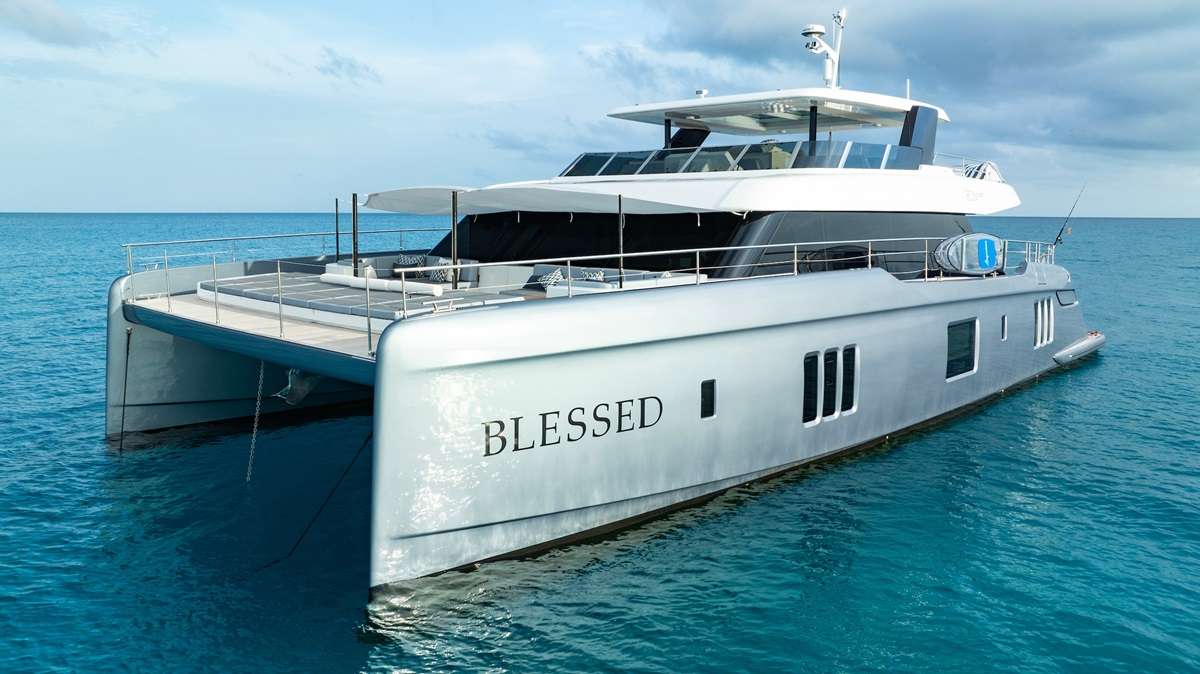
A 2024 Sunreef 80 is the newest luxury catamaran in the Virgin Islands. Hosting 10 guests in 5 cabins, she features a jacuzzi flybridge, alfresco dining for 10, and refined interiors. With a Toy Garage for eFoils, SeaBobs, and SCUBA, BLESSED delivers adventure and Caribbean spirit on a winter charter.
This Lagoon SEVENTY7 is the pinnacle of luxury catamarans, blending award‑winning design with expansive living spaces. In addition, she welcomes 8 guests in 4 cabins, offering cozy interiors and smooth indoor‑outdoor flow. With few openings in winter, booking AEOLUS gives a special Caribbean experience.
A custom Sunreef sailing catamaran, Ohana 80, hosts 10 guests in 5 king‑size ensuite cabins. With wet bars, a jacuzzi flybridge, alfresco dining, and a swim platform, she blends style with Hawaiian spirit. Finally, seabobs, scuba gear, and water toys complete this one‑of‑a‑kind luxury charter experience.
The best time to charter in the BVI depends on your lifestyle, whether you crave festive regattas or peaceful anchorages. With limited availability during peak dates, now is the time to secure your yacht. So, check availability for peak dates and start planning your BVI yacht charter today.
Read about planning around fixed charter dates.
It depends on your priorities. January–April generally suits guests who want winter trade winds; May often offers a warmer and less crowded alternative. Compare actual yachts and forecasts for your dates.
In terms of sailing, trade winds blow 10–20 knots. Moreover, sailors cross short distances between islands and enjoy sheltered anchorages.
When it comes to options, catamarans are spacious and stable. Furthermore, monohulls give a classic sailing feel, while motor yachts are fast and luxurious.
Snorkeling, diving, paddleboarding, fishing, and island excursions are common. Many yachts carry water toys.
Fly into Tortola (EIS) or connect via St. Thomas (USVI) and take a ferry or short flight.
No. The Atlantic season ends November 30. Yachts may return to the BVI at different times during the month, so confirm both the operator’s schedule and storm terms.
Possibly, but no rate reduction is guaranteed. Some yachts are elsewhere or not operating in the BVI, and storm-related flexibility and insurance can matter more than the weekly base rate.
No. Wind, swell, sea state, mooring availability and the captain’s judgment determine the safe route. Name your priority stops when asking for yachts, and agree on alternatives.
The destination is open, but individual yachts and services may have seasonal operating schedules.
No. Rates and specials are yacht-specific.
No. Seasonal patterns help with planning, but current forecasts control the actual itinerary.
Read through frequently asked questions about BVI sailing.
Contact us at 1-321-777-1707 or complete this form to discuss your vacation plans.